


Beyond Traditional: Creating a Warm & Timeless Nursery with Walnut
When it comes to designing a nursery, there’s no rule that says you have to stick to traditional light wood tones or classic baby-room styles.
For @laurenodessa, creating her little boy’s nursery was an opportunity to design a space that felt warm, timeless, and truly connected to the rest of her home. With our Mid-Century Crib in Walnut as one of the room’s statement pieces, she created a beautiful balance of rich wood tones, soft textures, vintage-inspired details, and earthy colors.
We sat down with Lauren to talk about her inspiration, her approach to nursery design, and why choosing a darker wood tone helped bring warmth and character to this special space.
Tell us a little about yourself and your family. What inspired you when you started designing your baby’s nursery?
I’m Lauren, a mom and content creator living in Charleston with my husband, our toddler, and another little boy on the way! I share a lot of motherhood, home projects, and everyday life, so designing spaces in our home has become something I really love.
When I started designing this nursery, I wanted it to feel completely different from a typical baby room. I was really drawn to warm, earthy colors, vintage-inspired details, and pieces that felt like they could grow with him. I wanted the room to feel peaceful and sweet for a baby, but also like a beautiful, intentional part of our home.
You chose our Mid-Century Crib in Walnut, a deeper and richer wood tone than our Hazelnut finish. What made you fall in love with Walnut for your baby’s nursery?
I knew pretty early on that I wanted a darker wood crib. I love lighter woods too, but the Walnut immediately made the room feel warmer and gave it so much more depth and character. It felt timeless rather than overly “baby,” which was really important to me.
The Mid-Century Crib was also such a beautiful statement piece without overpowering the room. The Walnut finish has this rich, warm tone that worked perfectly with the more vintage, collected look I was going for.
When designing the nursery, how did you incorporate the Walnut crib into the rest of the room? Were there any colors, textures, or other pieces you chose specifically to complement the darker wood tone?
I actually used the crib as one of the grounding pieces for the entire room. Because the Walnut is deeper and warmer, I balanced it with softer colors and textures throughout the nursery.
I incorporated muted greens, warm neutrals, creamy fabrics, and vintage-inspired details, especially through the landscape wallpaper. I also mixed wood tones rather than trying to make every piece of furniture match perfectly. I think that helped the room feel more collected and lived-in instead of like everything came from one furniture set.
The darker crib gave me the freedom to add softer, more romantic elements around it while still keeping the room feeling grounded and masculine enough for a little boy.
Since you designed the nursery yourself, what was the most important feeling you wanted the space to have — both for your baby and for your family?
I really wanted it to feel peaceful. Those newborn months involve so many late nights, feedings, contact naps, and quiet moments together, and I wanted this to be a room that I genuinely enjoyed spending time in too.
More than anything, I wanted it to feel warm and comforting—almost like a little escape within our home. I know babies don’t care what their nursery looks like, so in a lot of ways I think designing a nursery is also about creating a special space for the memories you’re going to make there as a family.
What advice would you give to another mom who is designing a nursery and is considering stepping away from traditional light wood tones?
Do it! I think sometimes we feel like a nursery has to be light, bright, and filled with traditional “baby” furniture, but some of my favorite parts of this room came from choosing pieces I would genuinely want elsewhere in my home.
A darker wood tone adds so much warmth and contrast, and it doesn’t mean the room has to feel dark or heavy. Pair it with softer fabrics, warm neutrals, wallpaper, or lighter elements and it can actually make the entire space feel more intentional.
I’d also say not to get too caught up in making every wood tone match. Choose pieces you truly love and let the room come together over time. For me, that’s what gives a space personality and makes it feel like home.


Mid-Century Convertible Crib in Hazelnut


Mid-Century 6 Drawer Dresser in Hazelnut


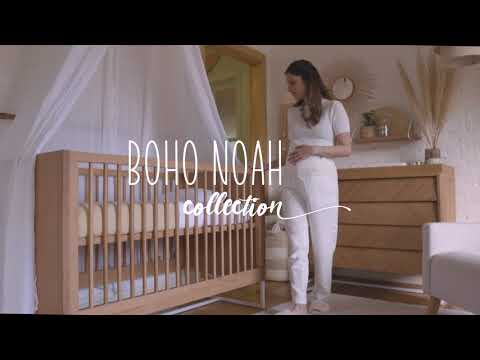


Boho Noah Convertible Crib in Hazelnut






Leave a comment